
A notary can refuse to close on your Italian property purchase over a single mismatched wall. It sounds extreme until you understand why: Italian law requires cadastral conformity between what’s actually built and what’s officially registered, and when the two disagree, the deed can’t legally proceed. If you’re buying in Trieste, Gorizia, Trento, or Bolzano, there’s a second layer to this — a land registry system found nowhere else in Italy — that makes getting cadastral conformity right even more important before you sign anything.
Table of Contents
This guide breaks down how Italy’s property registers actually work, what cadastral conformity means in practice, and what happens when a property’s physical state doesn’t match its paperwork at closing.
What the Catasto Actually Does.
The Catasto is Italy’s national inventory of real estate, managed by the Agenzia delle Entrate. Its purpose is fiscal and administrative, not legal.
Tax valuation. It establishes the cadastral yield (rendita catastale) for buildings, or the equivalent land-based value for agricultural property, which forms the base for taxes like IMU, ILIA, TARI, and registration taxes.
Technical identification. Every property is located through a precise hierarchy: administrative municipality, census zone, map sheet (foglio), and parcel or subaltern (particella/subalterno).
Category assignment. The Catasto also assigns every property a cadastral category — the code that determines whether it’s legally residential at all, which matters just as much as conformity itself and is covered separately in Italian Cadastral Categories: The Studio Apartment Trap.
No proof of ownership. This is the detail most buyers miss. The Catasto is explicitly non-probative — being listed as the owner in a cadastral record (visura catastale) does not legally prove you hold title. It records possessors for tax and mapping purposes only. Cadastral conformity, in other words, is about whether the building matches its plan — not about who legally owns it.
Catasto vs. Tavolare: Why Trieste Works Differently.
Across most of Italy, ownership transfer and legal publicity run through the Conservatoria dei Registri Immobiliari, which tracks property history by owner. But in former Austro-Hungarian territories — Trieste, Gorizia, Trento, Bolzano, and parts of Udine, Belluno, Vicenza, and Brescia — a different system applies: the Tavolare, or Libro Fondiario.
| Feature | Catasto (Cadastre) | Tavolare (Land Register) |
|---|---|---|
| Primary purpose | Fiscal assessment, mapping, taxation | Legal ownership and real-rights publicity |
| Legal effect | Non-probative — doesn’t prove ownership | Probative and constitutive — ownership passes only upon registration |
| Basis | National census of properties | Inherited Austro-Hungarian system (Landtafeln / Hauptbuch) |
| Tracking focus | Organizes by tax unit (parcel) | Tracks the property itself, by Partita Tavolare |
In Trieste specifically, this isn’t a historical footnote — it’s the system a buyer actually transacts under. Ownership here doesn’t pass the moment the deed is signed, the way it does under standard Italian civil law (principio consensualistico). It’s constitutive: when you sign the deed of sale (rogito) before a notary, the notary files an application (domanda tavolare), a temporary mark called a piombatura is applied, and legal ownership transfers only once the Tavolare Judge (Giudice Tavolare) issues a formal decree approving registration. Until that decree is issued, cadastral conformity checks and Tavolare registration both have to be clean — a gap in either one can hold up the transfer.
When Physical Reality and the Cadastral Plan Disagree.
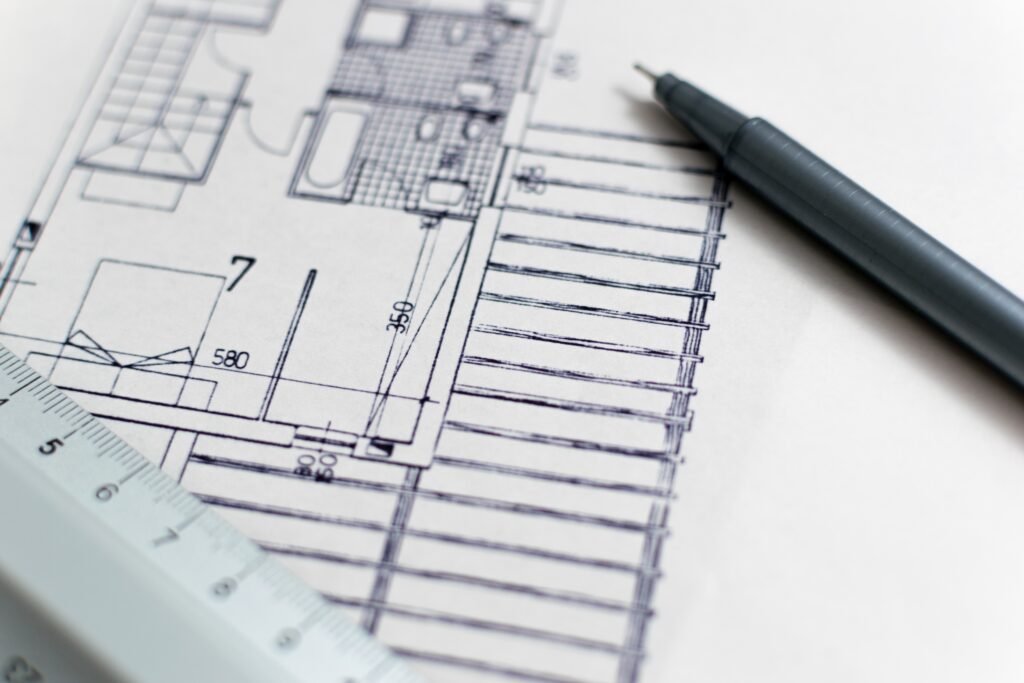
Before a deed of sale, Italian law requires strict cadastral conformity — the actual layout of the home, including walls, doors, windows, and how each space is legally used, has to exactly match the official floor plan (planimetria catastale) on file with the Catasto.
The most common cadastral conformity issues we see:
- Internal layout changes made without updating the plan — a moved wall, an added or removed bathroom, a closet converted into a bedroom.
- Unpermitted structural additions — an enclosed veranda, a raised roof, an unauthorized mezzanine (soppalco).
- Discrepancies in how secondary spaces are described — a cellar or attic that’s used differently than its plan states.
None of these are always visible on a walkthrough. That’s exactly why cadastral conformity is checked against documents, not eyeballed.
What Happens When Cadastral Conformity Fails at Closing.
Nullity of the deed. By law, the seller must declare in the notarial deed that the cadastral plan matches the property’s actual state. A major discrepancy means the notary can’t legally proceed — or the deed itself may be deemed null and void. This is the sharpest version of what a lack of cadastral conformity can cost you: the entire transaction stalling or unwinding.
Mortgage denial. If you’re financing the purchase, the bank’s surveyor (perito) will inspect the property before approving the loan. A mismatch between the physical layout and the registered plan or municipal permits is enough for the bank to freeze or reject the application until cadastral conformity is restored.
Unexpected costs. Formalizing an unauthorized modification (sanatoria) means hiring a qualified technician — architect, engineer, or geometra — to file updated plans and pay administrative fines. A minor internal update with no structural or permitting issue can be resolved through a DOCFA filing in a few days for a moderate fee. A major or unsanctionable violation — one that breaches local building codes or landscape restrictions (vincoli paesaggistici) — may be impossible to regularize at all, forcing costly demolition or restoration to the original state.
Closing delays. Resolving a cadastral conformity issue can push a closing back by weeks or months. In Tavolare areas specifically, missing technical filings — like a correspondence plan (piano di corrispondenza) linking historic maps to modern cadastral parcels — can add another two to four months to the timeline.
Cadastral Conformity Checklist for Trieste and the Former Austro-Hungarian Territories.
Buying in a Tavolare jurisdiction adds a step most cadastral conformity checklists elsewhere in Italy don’t need to cover:
- Documentary audit. Pull the visura, the cadastral floor plan (planimetria), and the Tavolare record — the Partita Tavolare and any Foglio C encumbrances registered against it.
- On-site verification. Cross-check the property’s real-world layout against official municipal building permits and the current cadastral filing.
- Correspondence plan check. In older Tavolare buildings, confirm whether a piano di corrispondenza between historic and modern cadastral references exists and is current — a common, easily missed gap.
- Resolution planning. If an anomaly turns up, involve a trusted technician and, where needed, the relevant public office before you’re contractually committed to the purchase.
Cadastral conformity is really the paperwork half of a larger due-diligence process. The surface figures on the plan you’re checking — commercial, net, or cadastral — need their own verification too, which we cover in Property Surface Area in Italy: The Costly Confusion. And the property’s cadastral category matters just as much as its layout: a space registered as non-residential can be perfectly conformant on paper and still not be a legal home, a separate trap we break down in Italian Cadastral Categories: The Studio Apartment Trap.
Where Cadastral Conformity Problems Actually Come From.
Cadastral conformity gaps rarely start as fraud. They’re usually the accumulated result of small, undocumented decisions made over decades of ownership. A previous owner closes in a balcony for extra floor space and never files the update. A tenant-turned-buyer walls off part of a large room to create a second bedroom, twenty years before the current seller ever owned it. A ground-floor storage room quietly becomes a home office, with nobody thinking to touch the cadastral plan because nothing about it felt like a “real” renovation.
In older buildings — and Trieste’s historic center is full of them — cadastral conformity issues compound across multiple ownership changes, each one adding a small, undocumented layer on top of the last. By the time a current seller lists the property, they may genuinely not know that a wall moved two owners ago; that doesn’t change the notary’s obligation to confirm cadastral conformity before the deed can proceed, and it doesn’t change the risk sitting with whoever ends up holding the property when the mismatch surfaces.
Heritage-protected buildings add a further layer worth flagging for Trieste buyers specifically. In districts like Borgo Teresiano and San Vito, properties under Soprintendenza review face tighter restrictions on what can be modified in the first place — which means an unauthorized change is both a cadastral conformity problem and, potentially, a heritage-protection violation at the same time. That combination is harder and slower to resolve than a standard DOCFA update, and it’s worth knowing before you fall in love with a period apartment that’s had “some work done” without paperwork to match.
Why This Belongs Before an Offer, Not After.
The mistake we see most often isn’t a buyer who ignores cadastral conformity — it’s one who assumes it’s the notary’s job to catch, at the very last stage of the process. By the time a notary flags a discrepancy, you may already have a deposit down, a mortgage application in motion, and a moving date booked around a closing that can’t happen on schedule.
A proper due-diligence pass checks cadastral conformity before you’re emotionally or financially committed to a specific property — while there’s still room to walk away, negotiate a price adjustment, or simply ask the seller to resolve the issue first. That’s the sequencing that actually protects a buyer, and it’s why cadastral conformity checks are the first thing we run on any property we represent a buyer for, not an afterthought at the notary’s office. For the fuller due-diligence picture — catasto, condono edilizio, and heritage constraints together — see Buying Property in Trieste: What They Don’t Tell You.
Cadastral Conformity and Renovation Plans.
If you’re buying with renovation in mind, cadastral conformity isn’t just a closing-day concern — it shapes what you’re legally allowed to do afterward. A permit application for renovating a property with an existing, undisclosed cadastral conformity gap typically has to resolve that gap first, before the municipality will even process the new request. In practice, that means a buyer who assumed they’d sort out “cosmetic” cadastral conformity issues after closing can find their actual renovation timeline pushed back by the very paperwork problem they meant to deal with later.

This is worth raising directly with the seller during negotiation, not after the deed is signed. Asking a seller to confirm cadastral conformity in writing, and to resolve any known gap before closing — or to price it into the offer if they won’t — is a normal, expected part of buying property in Italy, not an adversarial move. Sellers who’ve owned a property for decades are often unaware of a conformity gap themselves, which is exactly why an independent check, rather than taking the seller’s word for it, is the only way to actually know where you stand.
Frequently Asked Questions
What does cadastral conformity mean in a home sale?
It means the property’s actual physical layout — walls, rooms, doors, windows — matches exactly what’s officially registered on the cadastral floor plan filed with the Catasto. Italian law requires this match before a deed of sale can be signed.
Can a sale proceed if cadastral conformity is missing?
Not legally, if the discrepancy is material. The notary is required to confirm conformity in the deed, and a significant mismatch can make the notary refuse to proceed or the deed itself void.
Is the Tavolare system the same as the Catasto?
No. The Catasto is a fiscal register that doesn’t prove ownership. The Tavolare, used in Trieste and other former Austro-Hungarian territories, is the legal register that actually transfers ownership through a court decree.
Who fixes a cadastral conformity problem?
A qualified technician — typically an architect, engineer, or geometra — files the correction, often through a DOCFA update for minor issues. Major violations of building or landscape rules may not be fixable at all.
Before you make an offer, get cadastral conformity checked properly — not assumed. If you need help in the process Book your free intro call.