
Trieste sits in the far northeast corner of Italy, where the limestone cliffs of the Karst plateau drop into the Adriatic. For over a century it was the main seaport of the Austro-Hungarian Empire, and that history is still the first thing you notice: Habsburg architecture, a genuinely multicultural population, and a pace of life that has nothing to do with the tourist-town version of Italy most people picture.
Table of Contents
Living in Trieste means Italian dolce vita layered with Central European order and a strong Slavic influence — a combination that doesn’t really exist anywhere else in the country.
Whether you’re weighing a weekend visit or a permanent move, here’s what living in Trieste actually involves — the neighborhoods, the food, the local customs, and the real estate market behind all of it.
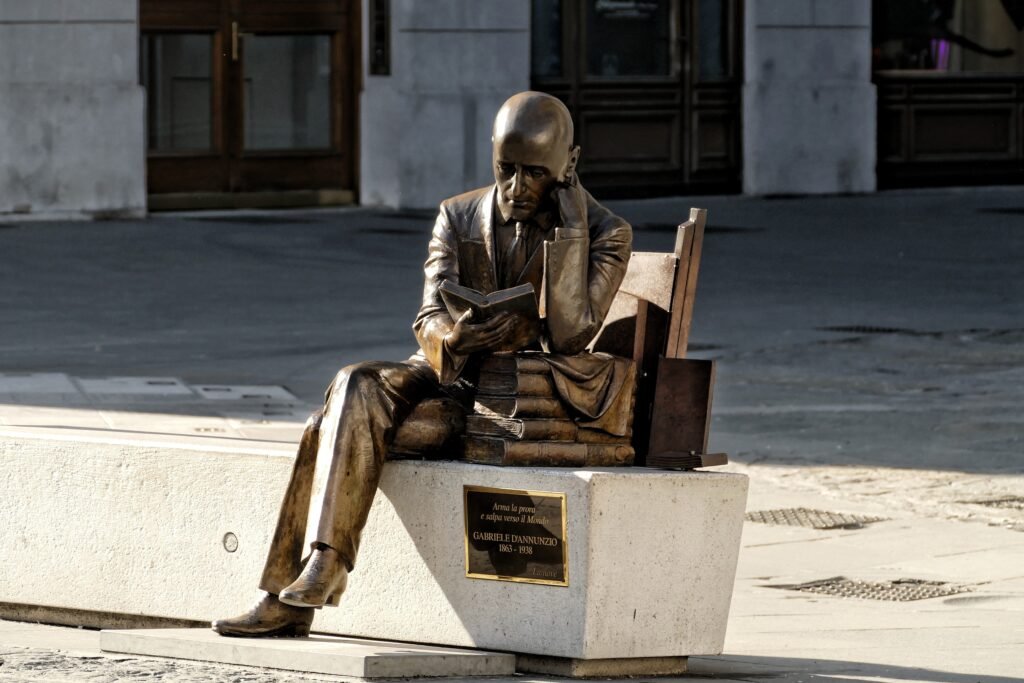
It also helps to be clear about what living in Trieste isn’t. It isn’t a resort town that empties out after August, and it isn’t a stand-in for the Tuscan countryside with better prices. It’s a working port city with a genuine year-round population, an international scientific community, and a culture shaped as much by Vienna and Ljubljana as by Rome. That distinction matters if you’re comparing it against other places in Italy on a shortlist — living in Trieste is a different proposition than living in a heritage tourist town, even where the price per square meter looks similar.
What to See First: Grand Squares to Coastal Castles.
Trieste rewards walking. Every turn reveals a neoclassical facade, a quiet cobblestone alley, or an unexpected view of the sea, and most of the city’s landmarks sit within a manageable walk of each other.
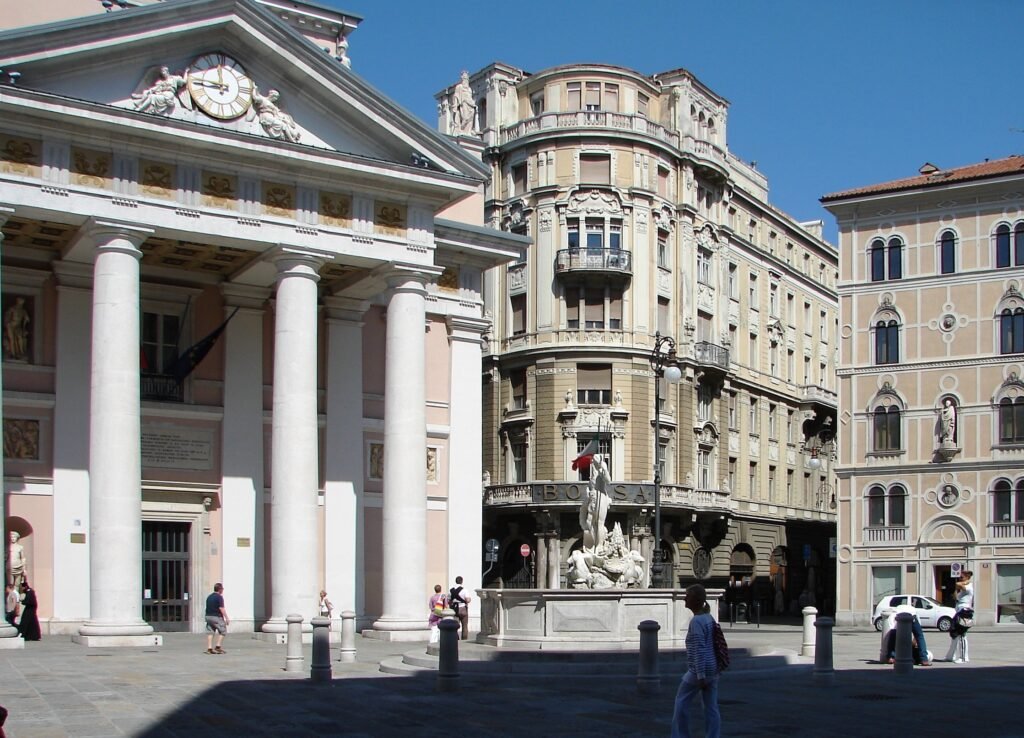
Piazza Unità d’Italia is Europe’s largest sea-facing square, framed by 19th-century palaces. Watching the Adriatic from here at sunset is close to a rite of passage for anyone spending real time living in Trieste.
Miramare Castle, perched on a rocky promontory just north of the city, was built for Archduke Ferdinand Maximilian of Habsburg. Its surrounding park is one of the better weekend walks the city has to offer.
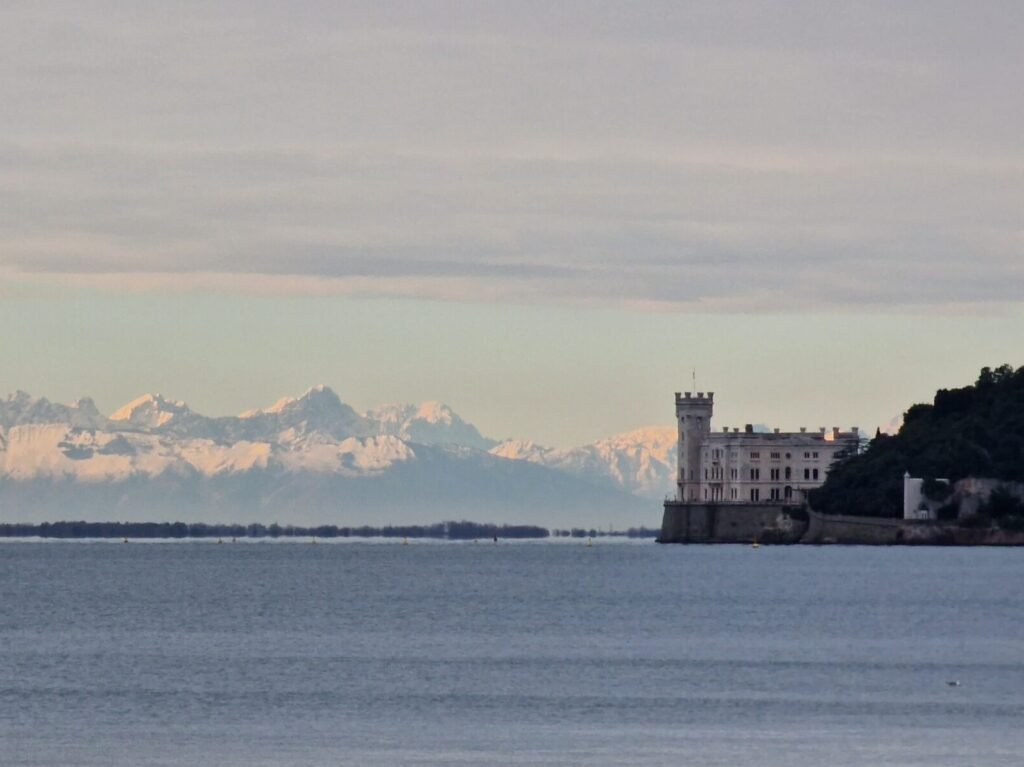
San Giusto Hill and Cathedral is the ancient core of the city — a hilltop castle and medieval cathedral with panoramic views across the rooftops and the gulf.
Barcola Promenade is the seaside boulevard where locals actually spend their time: jogging, walking, and as soon as the weather allows, laying out on the pine-shaded concrete platforms known as topolini to swim.
Food and Wine: What Living in Trieste Actually Tastes Like.
Trieste’s food doesn’t look like the pasta-and-tomato image most people associate with Italy, because its culinary history runs through Austria, Hungary, and the Balkans as much as it does through the Mediterranean.
The osmiza tradition is unique to the Karst hills above the city: rural farmhouses, marked by an ivy branch (frasca) hung by the road, open seasonally to serve their own wine — Terrano or Vitovska — alongside cured meats, boiled eggs, and local cheese. It’s one of the more distinctive things about living in Trieste and rarely shows up in guidebooks about the rest of Italy.
Historic city-center taverns, or buffet, serve the Triestine classics: Liptauer cheese spread, boiled pork cuts (porcina), sauerkraut, and jota — a hearty bean and sauerkraut soup that owes more to Vienna than to Rome. Coastal trattorias in Barcola and Cavana handle the seafood side: marinated sardines, grilled calamari, risotto alla marinara. And the city’s literary cafés — Caffè San Marco, Caffè Tommaseo — pair Austro-Hungarian pastries like presnitz and putizza with the espresso Trieste is genuinely known for.
The Local Customs You’ll Actually Use.
Living in Trieste means adopting habits that don’t exist anywhere else in Italy, starting with how you order coffee. Trieste is home to the Illy brand and handles a large share of Italy’s green coffee bean imports through its port, and the local coffee vocabulary reflects that history:
- Nero — a standard espresso in a porcelain cup.
- Capo — an espresso with a small amount of warm foamed milk, served in a glass (in bicio).
- Capo in B — the same thing, served specifically in a small glass — the local favorite.
- Goccia — an espresso with just a single drop of milk.
Then there’s the Bora, a powerful, dry katabatic wind that sweeps down off the Karst plateau and can reach well over 100 km/h on its stronger days. Rather than dreading it, people who spend real time living in Trieste tend to embrace it — it clears the air, sharpens the sky, and gives the city a distinct energy the rest of the year doesn’t have.
Every October, the city hosts the Barcolana, one of the largest sailing regattas in the world — thousands of boats gathering in the Gulf of Trieste for a week of racing, music, and celebration that effectively takes over the city.
The Neighborhoods That Define Living in Trieste.
Living in Trieste looks different depending on which neighborhood you land in. Each pocket of the city offers a genuinely different version of living in Trieste, which is part of why the city works for such a wide range of people — students, retirees, remote workers, and families all tend to gravitate toward different pockets of it.
Borgo Teresiano and Canal Grande — flat, elegant, and neoclassical, right in the absolute center. Boutique shops, cafés, and a flat walk to the train station make this the natural choice for anyone prioritizing central living over green space.
Cavana and Città Vecchia — the fully pedestrianized old town, dense with wine bars, galleries, and restaurants. It’s also the part of the city most popular for short-term holiday lets and younger professionals, which is worth knowing if quiet evenings matter to you.
San Vito and Campi Elisi — an upscale, green, residential hill directly above the sea, known for historic villas and real quiet. This is the pocket of the city where long-term, lifestyle-driven buyers tend to end up.
Roiano and Gretta — family-friendly, residential, and genuinely good value, with local markets and easy access to the Barcola coast. Less about the postcard view, more about actually living in Trieste day to day.
We go deeper on the investment angle behind these same districts — including current price-per-square-meter and rental yield data for each — in Trieste Real Estate: The Smartest Places to Invest in 2026.
Why People Choose Trieste Over Milan, Florence, or Venice.
For expats, remote workers, and investors, living in Trieste comes with a quality of life that’s hard to match elsewhere in Northern Italy, paired with real estate values that haven’t caught up to it yet.
An international hub. Trieste hosts serious scientific institutions — AREA Science Park, SISSA, the Elettra Synchrotron — and sits within an hour of Slovenia and Croatia, which shapes a genuinely international, multicultural community rather than an expat bubble.
A high quality of life. The city is safe, walkable, and gives you both sea and mountain access within the same afternoon, alongside a well-regarded healthcare system.
Real estate value. Prices per square meter remain meaningfully below Milan, Florence, or Venice, with rental yields that compare favorably as a result — a gap we break down in detail in the investment guide linked above.
Living in Trieste as a Renter First.
Not everyone moving to Trieste starts by buying. Renting for a year before committing to a purchase is a common — and sensible — way to test which neighborhood actually fits how you live, and Italy’s rental system gives you several structures to do that with. A transitional lease (1 to 18 months) suits someone relocating for a fixed-term assignment; a standard long-term contract suits someone planning to stay. We cover what each option actually involves, including the paperwork and tax mechanics behind them, in Italian Lease Contracts: The Mistake That Costs Landlords — worth reading before you sign anything, whichever side of the lease you’re on.
Living in Trieste: A Realistic Starting Point.
Trieste isn’t a “hidden gem” — it’s a working port city with genuine international infrastructure, a distinct culture, and prices that are still catching up to what the city actually offers. That’s the honest version of the pitch, and it’s a more useful one than the tourist-brochure version if you’re actually considering living in Trieste rather than just visiting it.
If a move toward buying feels closer than renting, the practical next questions are about the property itself — what its documents say, whether its layout matches its paperwork, and what condition its systems are really in. Our due-diligence checklist for buyers, covering exactly that, is laid out in Buying Property in Trieste: What They Don’t Tell You.
The Practical Side of Living in Trieste.
Beyond the food and the views, living in Trieste involves the same practical questions anyone relocating within the EU or from further abroad has to work through: residency registration, healthcare enrollment, and the day-to-day logistics of a smaller city rather than a metropolis.
Non-EU citizens planning on living in Trieste for longer than a tourist stay will need the standard visa and permesso di soggiorno process that applies across Italy — nothing about Trieste changes those national requirements. EU citizens have it simpler: registering residency (residenza) at the local anagrafe office is generally enough to access the public healthcare system and other resident services. Either way, the process runs through the same municipal offices as anywhere else in Italy, just with considerably shorter lines than you’d find in Milan or Rome.
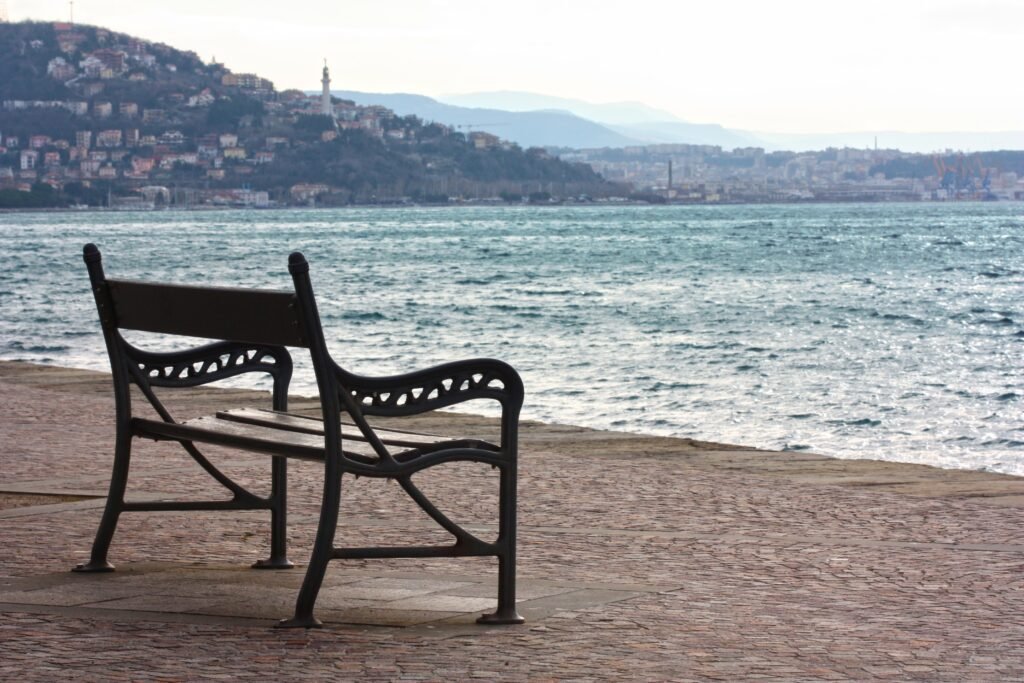
Day-to-day logistics are part of what makes living in Trieste comfortable rather than just scenic. The city is compact enough that most residents don’t need a car for daily errands — public transport and walking cover the center and most surrounding neighborhoods — though a car becomes genuinely useful for reaching the Karst plateau’s osmize or the coastal towns toward Slovenia. Trieste Airport (TRS) handles regional and some international routes directly, and Venice Marco Polo is under two hours away by car for longer-haul connections, which matters if living in Trieste means staying connected to family or work abroad.
Healthcare is another point in the city’s favor: Trieste has a well-regarded public hospital system and a history as a center for medical and scientific research, which shows up in the quality of care available even outside the major national hubs. For anyone weighing living in Trieste against a bigger Italian city, this is one of the areas where the smaller city doesn’t feel like a compromise.
Frequently Asked Questions.
Is living in Trieste a good option for foreigners?
Yes — it has an established international community tied to its scientific institutions and port, multilingual daily life, and real estate values well below comparable Northern Italian cities. Whether it fits you specifically depends on your goals, which is worth thinking through before committing to a purchase.
What’s the best neighborhood for someone new to living in Trieste?
It depends on what you’re optimizing for: Borgo Teresiano for central, walkable living; San Vito for quiet and views; Cavana for nightlife and old-town character; Roiano for value and family life.
Do you need to speak Italian for living in Trieste day to day?
It helps, but the city’s multicultural, multilingual history means you’ll hear German, Slovenian, and Italian in daily use, and there’s a substantial international community already established here.
Is Trieste expensive compared to the rest of Italy?
No — cost of living, dining, and property prices all run meaningfully below Milan or Rome, which is a large part of what’s currently drawing foreign buyers and remote workers to living in Trieste.
Is living in Trieste realistic without owning a car?
Yes, for most day-to-day needs within the city center and surrounding neighborhoods — walking and public transport cover it. A car becomes useful mainly for the Karst plateau and coastal day trips, not for daily living in Trieste itself.
If living in Trieste has moved from an idea to an actual plan, the next step is understanding the market and the paperwork behind it — not just the neighborhood. Book your free intro call.