
Trieste real estate is delivering gross yields nearly three points ahead of Milan, and prices are still catching up to that story. But “invest in Trieste real estate” isn’t one decision — it’s three, depending on which district and which tenant you’re underwriting for.
Table of Contents
Anyone researching Trieste real estate right now runs into the same headline fast: a working port, a growing research sector, and prices that haven’t caught up yet. What’s harder to find is which district of Trieste real estate actually matches your exit strategy, a long-term family let, a corporate mid-term contract, or a short-stay unit near the water. Each one comes with a different entry price, a different tenant, and a different set of 2026 rules attached. Here’s what the numbers on Trieste real estate actually show, and what they leave out.
Why Trieste Real Estate Is Outperforming in 2026
Trieste real estate averaged €2,693 per square meter in August 2026, up 10.14% year-over-year, one of the sharper annual moves among mid-sized Italian cities, according to Immobiliare.it’s market report. Average asking rents climbed alongside it, up 10.06% to €12.47 sqm/month.
Yields on Trieste real estate have kept pace with prices rather than being squeezed by them. The city’s average gross residential yield sits at 7.43%, with two-bedroom units averaging 8.0% and one-bedroom units 6.74%. That compares to Milan’s 4.97% and Florence’s 5.25%, and sits comfortably above Italy’s national average of 6.61%, per Global Property Guide’s Q3 2026 city comparison.
The demand side of Trieste real estate isn’t speculative. The Port of Trieste, Italy’s busiest port by cargo tonnage, driven largely by the SIOT pipeline terminal, handled 29.5 million tonnes in the first half of 2026 alone, up 2.7% on the year, with the combined Trieste–Monfalcone port system on a trajectory toward becoming Italy’s leading port system by volume (ANSA). That, plus a genuinely growing research sector (AREA Science Park, SISSA, Elettra Synchrotron), is what’s pulling both workers and capital toward Trieste real estate — not a one-off news cycle.
Cross-border interest is part of what’s absorbing that supply: buyers from Austria and Germany have been treating the price gap against Vienna and Munich as a deliberate comparison point, which is putting upward pressure on well-located Trieste real estate stock. None of this makes every listing a good investment, it makes the district-level differences below the part worth getting right.
Roiano: Steady Returns in Trieste’s Family Housing Market
Best for: stable, low-vacancy residential lets with a straightforward tenant pool.
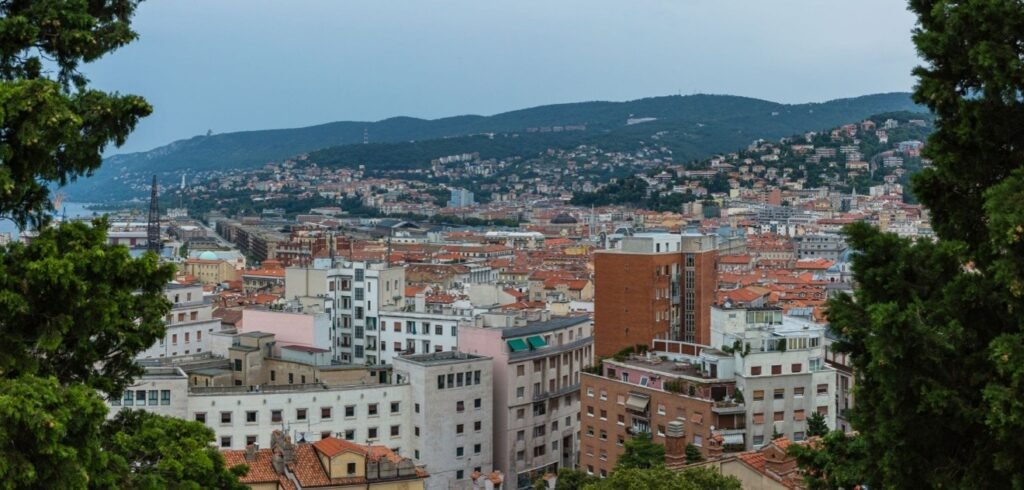
Roiano sits in the valley behind Trieste Centrale station, stretching toward Barcola, a working residential district, not a tourist one, that’s benefited from genuine public investment (pedestrian upgrades, underground parking, renovated green space) without pricing out the people who actually live there. Of the three districts here, Roiano Trieste is the closest thing to a low-drama entry into Trieste real estate.
Key market data:
- Acquisition cost: the Roiano–Gretta–Barcola zone averaged €2,842/sqm as of August 2026 — slightly above the citywide average, reflecting recent demand (Immobiliare.it)
- Asking rent: roughly €11–12.50/sqm/month, tracking just under the citywide average of €12.47
- Realistic gross yield: 6–7.5%, in line with one- and two-bedroom performance citywide
Tenant profile: young families, healthcare workers, and rail commuters to Monfalcone, Udine, and Venice. Roiano Trieste’s self-contained commercial core — schools, supermarkets, a functioning local market — keeps tenant turnover low, which matters more to your actual return than the headline yield does.
What to buy: 1960s–1980s multi-unit buildings with elevators, ideally needing cosmetic or energy-class work rather than structural intervention. Converting an underused 2-bedroom into a tighter 3-room layout suits the family-tenant profile and pairs well with a canone concordato (agreed-rent) contract, which still carries the reduced 10% cedolare secca rate for 2026, see the tax section below before you assume that applies to you.
Via Flavia: Trieste’s Industrial Real Estate Corridor
Best for: low-vacancy corporate and mid-term leases, insulated from tourism seasonality.
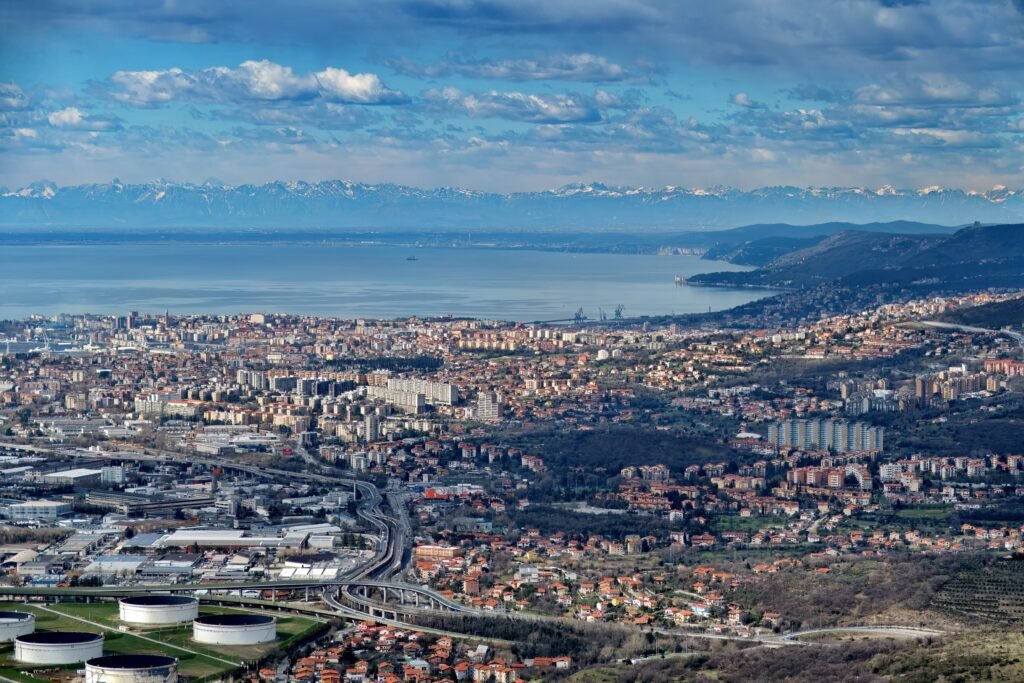
Via Flavia Trieste runs through the city’s real Zona Industriale, the city’s industrial and port-logistics district in the south-east, not a scenic corridor. It’s home to warehousing, logistics operators, and businesses tied to the port’s Zaule terminal, and it’s genuinely one of the more affordable pockets of Trieste real estate: the surrounding zone averaged €2,049/sqm in August 2026, the lowest of the city’s tracked micro-areas (Immobiliare.it).
They still matter to this pocket of Trieste real estate (researchers and contractors commute through the same south-eastern approach to the city), but don’t market a property as “steps from AREA Science Park” if it’s on Via Flavia, it isn’t, and a buyer who checks a map will notice.
Key market data:
- Acquisition cost: €2,000–€2,350/sqm, consistent with the zone’s OMI-tracked average
- Realistic gross yield: 6.5–8%, at the higher end of Trieste’s range given lower entry prices against citywide rents
Tenant profile: logistics technicians, industrial managers, port-adjacent contractors, and researchers commuting from the Karst campuses. Several employers in the zone contract housing directly for visiting specialists, which is the real source of this pocket of Trieste real estate’s low-vacancy reputation — not the address itself.
What to buy: furnished 1- and 2-bedroom units with reliable internet, air conditioning or a heat pump, and dedicated parking — a real premium along Via Flavia Trieste. Contratti transitori (1–18 month transitional leases) suit this tenant base and typically command higher monthly rent than standard long-term contracts, with the flexibility to sell or reoccupy sooner.
Lower San Vito and Cavana: Trieste’s Premium Real Estate Play
Best for: capital appreciation and short-stay yield, at a materially higher entry cost and higher regulatory exposure.
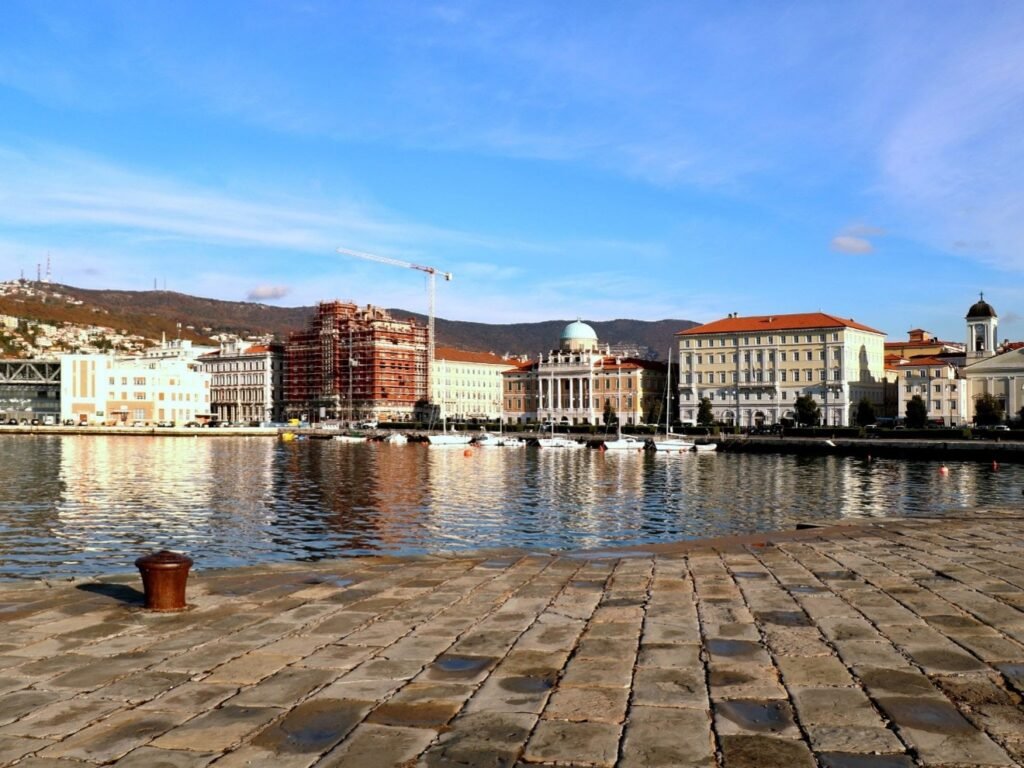
San Vito is Trieste’s most prestigious residential hill; where it slopes down toward Cavana and the historic center, it picks up walking access to the Rive seafront, Piazza Unità d’Italia, and Cavana’s dining scene. That combination is why San Vito Cavana real estate commands the highest entry price in the city, and why it attracts both long-term high-net-worth buyers and short-stay operators.
Key market data:
- Acquisition cost: €3,300–€4,200+/sqm — using Trieste’s Centro average of €3,329/sqm as the baseline, with a premium for the prime coastal-adjacent stretch (Trieste’s official OMI – Osservatorio Mercato Immobiliare, zone data is the reference to pull before you make an offer)
- Short-stay average daily rate: citywide Airbnb ADR is roughly €145 (37.7% average occupancy), with top-performing listings — the kind this location can plausibly support — reaching €225+ at 76%+ occupancy (AirROI, figures converted from USD)
- Realistic yield: 4.5–5.5% on a long-term let; meaningfully higher, but far more occupancy-dependent, on a well-run short-stay operation
Tenant profile: relocating executives and high-net-worth long-term buyers on one side; international tourists and business travelers drawn to the waterfront on the other. It’s the one corner of Trieste real estate where the buyer and the guest are looking for almost the same thing.
What to buy: period apartments (palazzi storici) with height, light, and original detail — sea view or balcony where possible. Given the entry price, renovation and interior quality aren’t optional in this segment of Trieste real estate; they’re what separates a listing that holds its average daily rate from one that discounts to fill nights.
Trieste Real Estate by the Numbers: Which District Fits Your Strategy
| District | Strategy | Entry Price/sqm | Gross Yield | Primary Tenant | Risk Profile |
|---|---|---|---|---|---|
| Roiano | Long-term residential | €2,600 – €2,900 | 6.0% – 7.5% | Families, commuters | Low — stable demand |
| Via Flavia | Corporate / mid-term | €2,000 – €2,350 | 6.5% – 8.0% | Industrial & research contractors | Low-medium — tied to local industry |
| Lower San Vito / Cavana | Short-term & appreciation | €3,300 – €4,200+ | 4.5% – 5.5% (long) / higher, occupancy-dependent (short) | Executives, tourists | Medium — seasonal and regulatory |
To put those numbers against the obvious alternative: Trieste real estate’s citywide 7.43% average yield is still well ahead of Milan’s 4.97% — the comparison worth having if you’re weighing this city against Italy’s more established market. We’ve broken that down property-by-property in Milan vs. Trieste: What €350k Buys You, the natural next read if the yield gap above is what convinced you.
What the Trieste Real Estate Yield Numbers Don’t Show You
None of the figures above tell you whether a specific property is clean. A discounted entry price against a strong yield estimate can mean genuine opportunity in Trieste real estate, or it can mean a catasto mismatch, an unresolved condono edilizio, or a condominium regulation that quietly bans the short-stay strategy your whole return depends on — worth checking before you buy in historical center specifically, where hosting restrictions vary building by building.
This is also where the agent conflict of interest matters more for an investor than for a lifestyle buyer: the agenzia immobiliare handling the listing is typically working for the seller, and a projected yield in a listing sheet is a sales input, not a verified one. It’s worth having that number checked by someone who isn’t paid by whoever’s selling.
We work only for you — never the seller — which is the whole reason to get a second, independent read before capital moves into any piece of Trieste real estate. For the full due-diligence checklist we run before any purchase, schedule a free introductory call with us, which covers the catasto, condono, and vincoli storici (cadaster, building amnesty and building heritage restrictions) checks in more depth than there’s room for here.
Tax Rules Every Trieste Real Estate Investor Should Check in 2026
Trieste real estate comes with its own 2026 tax mechanics, and three points are worth getting right before you model returns on any purchase:
- Long-term agreed-rent contracts (canone concordato, 4+4 or 3+2 structures — the fit for Roiano) still carry the reduced 10% or 21% cedolare secca rate for 2026 (depending on the situation)
- Short-term rentals changed meaningfully this year: the 21% cedolare secca rate now applies to your first two properties, not just one. From a third short-term unit, you trigger a legal presumption of business activity, requiring VAT registration and standard business tax treatment — a real constraint if you’re planning to scale a San Vito Cavana short-stay position past two units (source).
- Superbonus is not the incentive to plan around in 2026. It’s now restricted to properties in officially designated seismic-crater zones — Trieste isn’t one — and no longer functions as a general residential energy-retrofit scheme. Standard renovation and energy bonuses (tiered at 50%/36% depending on residency status) are what actually apply to Trieste real estate today. Budget energy-class upgrades on their real cost, not a subsidy that no longer covers this city — the upgrade is still worth doing given EU energy-performance rules tightening over the next decade, just don’t underwrite the purchase assuming a discount that, depending on the situation, won’t materialize.

Ready to Invest in Trieste Real Estate the Right Way?
The district comparison above gets you to a shortlist of Trieste real estate worth pursuing. It doesn’t verify title, check the condominium bylaws, or confirm which tax regime actually applies to your plan — that’s a separate, and necessary, step before capital moves.
Book your free intro call — we’ll look at the specific property and strategy behind your Trieste real estate plan, not just the neighborhood average.