
Most buyers glance at the letter on page one and move on. The rest of the APE energy certificate — the part that actually predicts your renovation bill — goes unread. Here’s how real estate professionals use it, and what to check on-site before you believe it.
Table of Contents
When you’re viewing a property in Italy, it’s natural to focus on light, layout, and finishes. The APE energy certificate covers none of that — and that’s exactly why it matters. While most buyers stop at the single letter grade (A4 down to G), the APE energy certificate is actually a technical blueprint of a home’s efficiency, heat loss, and system infrastructure. Read correctly, it tells you more about a property’s real condition than a walk-through ever will.
Here’s a practical guide to understanding the APE energy certificate, its legal requirements, and the on-site checks that confirm — or contradict — what the document says.
What Exactly Is the APE Energy Certificate?
APE stands for Attestazione di Prestazione Energetica — Energy Performance Certificate, formerly known as ACE. Governed by Decree-Law 192/2005 and its later amendments (notably the 2020 update implementing EU Directive 2018/844), the APE energy certificate measures an energy performance index based on standard property usage, not how the current owner actually lives in it.
That index accounts for year-round energy demand, including:
- Winter heating and summer cooling
- Domestic hot water (DHW)
- Mechanical ventilation
- For office or commercial spaces, artificial lighting, elevators, and stairwell energy use as well
The result is an energy performance certificate that’s standardized across property types, which is exactly what makes the APE energy certificate useful for comparison. A Trieste apartment and a Milan apartment are being measured against the same yardstick, regardless of how either owner actually uses the heating.
Who Can Issue an APE Energy Certificate?
The document must be drafted by an independent, certified technician, never by the seller or the listing agent, and never as a favor. Two paths qualify someone to issue an APE energy certificate:
- Directly qualified professionals: civil, building, and industrial engineers, licensed architects, and mechanical or electronic technical surveyors (periti tecnici).
- Qualified via certified training: engineers outside the civil/building field, urban planners, and technical surveyors from other specializations who have completed the required state or regional certification course.
One detail worth knowing if you’re the one commissioning it: certified copies of the APE energy certificate must be submitted to the regional energy database (SIAPE) within 15 days of issuance. A technician who skips this step, or who backdates a certificate, isn’t someone you want handling your file, and a buyer’s agent should be able to confirm the APE energy certificate on record actually matches what SIAPE shows.
Legal Obligations and APE Validity Rules
The APE energy certificate isn’t a formality tacked onto the paperwork — it’s a legal prerequisite for marketing, selling, and renting real estate in Italy. Here a list of transaction types and APE requirements:
| Transaction Type | APE Requirement |
|---|---|
| Property listings (ads) | Mandatory energy rating disclosure across all media |
| New constructions | Required at completion to obtain the Certificate of Habitability (Agibilità) |
| Sales (Paid transfer of the property) | Mandatory attachment to the final deed of sale (atto di compravendita) |
| Gifts (Gratuitous transfer of the property) | Disclosure required; physical attachment to the deed is not strictly mandatory |
| Leases (whole building) | Mandatory attachment to the rental agreement |
| Leases (single units) | Mandatory provision (dotazione); attaching it to the lease isn’t required |
| Tax incentives & public contracts | Mandatory to access energy efficiency bonuses or public management contracts |
| Exempt properties | Storage units, garages, basements, unheated seasonal sports structures, open parking |
If you’re buying and the seller can’t produce a valid APE energy certificate, that’s not a paperwork inconvenience to wave through, it’s a compliance gap that should be resolved, or priced in, before you sign. Every row in that table assumes a valid APE energy certificate exists in the first place; confirming that it does, and that it’s current, is step one of due diligence, not an afterthought you handle at the notary’s office.
How Long Is an APE Energy Certificate Valid?
APE validity runs up to 10 years from issuance, but that ceiling is conditional, not automatic. It holds only if boiler maintenance and mandatory system checks have been kept current according to local regulations. Miss a required check, and APE validity doesn’t just pause: the certificate decays on December 31st of the year following the first missed deadline. A boiler check due in 2024 and never performed quietly expires the APE energy certificate at the end of 2025, whether or not anyone noticed.
There’s a second trigger on APE validity worth flagging during due diligence: any renovation affecting the building envelope — a thermal insulation jacket (cappotto), window replacement — or any system upgrade requires a new, updated APE energy certificate. A seller who renovated last year and is still showing you a five-year-old document either hasn’t updated the APE energy certificate, or is hoping you won’t ask.
Reading the APE Energy Certificate: What Real Estate Pros Look For.
The energy letter gives a general overview, but professionals rely on the numbers underneath it, that’s where the APE energy certificate actually earns its keep. Three figures inside the APE energy certificate do most of the real work.
- Non-Renewable Global Energy Performance (EPgl,nren). Expressed in kWh/m² per year, this figure states the property’s precise energy consumption per square meter. Two Class E properties can carry very different EPgl,nren values; the one closer to the Class D threshold is a materially better bet than the one sitting at the bottom of the band, even though the letter on the cover page is identical.
- Heated Useful Surface (Superficie Utile Riscaldata). The APE energy certificate calculates efficiency strictly using rooms with heating elements, unheated storage rooms and pantries are excluded. This figure is for energy calculations only; don’t confuse it with the square footage used for valuation.
- System Capacity (kW). Output tells you whether a setup is autonomous or centralized. A standard autonomous boiler runs between 24 kW and 30 kW. A reading significantly higher — 50 kW or more — usually signals a centralized system, unless you’re looking at a large property (150+ sq. m) with genuinely high heating demand.
Cross-check all three figures against the on-site inspection below. An APE energy certificate that reads well on paper but doesn’t match what’s actually installed is a bigger red flag than a mediocre letter grade honestly reported.
On-Site Property Systems Inspection: Evaluating Heating, Cooling & Electrical
The APE energy certificate tells you what a property should be doing. Walking the property and checking the physical installations against that document is how you catch what it isn’t doing, and where the next renovation bill is hiding. None of the five checks below require special tools, just knowing what to look for and matching it back to the APE energy certificate you were handed.
1. Heating and Distribution Systems
Look for heat cost allocators (conta calorie) on individual radiators, these signal a centralized system with individual metering, which changes how condominium heating costs get split. Wall-mounted radiators dictate furniture layout in a way you should factor into any renovation plan. Fan coil units use forced air for both heating and cooling; unlike standard radiators, they can’t take heat cost allocators, so confirm the system layout directly with the owner rather than assuming.
Underfloor heating routes distribution manifolds through hall closets, utility risers (cavedio), or internal walls, worth locating before you plan a layout change. Skirting board (battiscopa) heating is easy to miss on a walkthrough; always verify with the owner rather than assuming a property has none.
2. Air Conditioning & Ventilation
Check the manufacturer label under the indoor unit (split) for refrigerant gas. Modern systems use R32 gas. R22 and other obsolete refrigerants have been banned from recharge in the EU since 2015 — if a unit still runs on one, a gas leak means replacing the entire system, not topping it up, since compliant refills no longer exist. This is one system where the APE energy certificate’s numbers and the physical unit can tell very different stories.
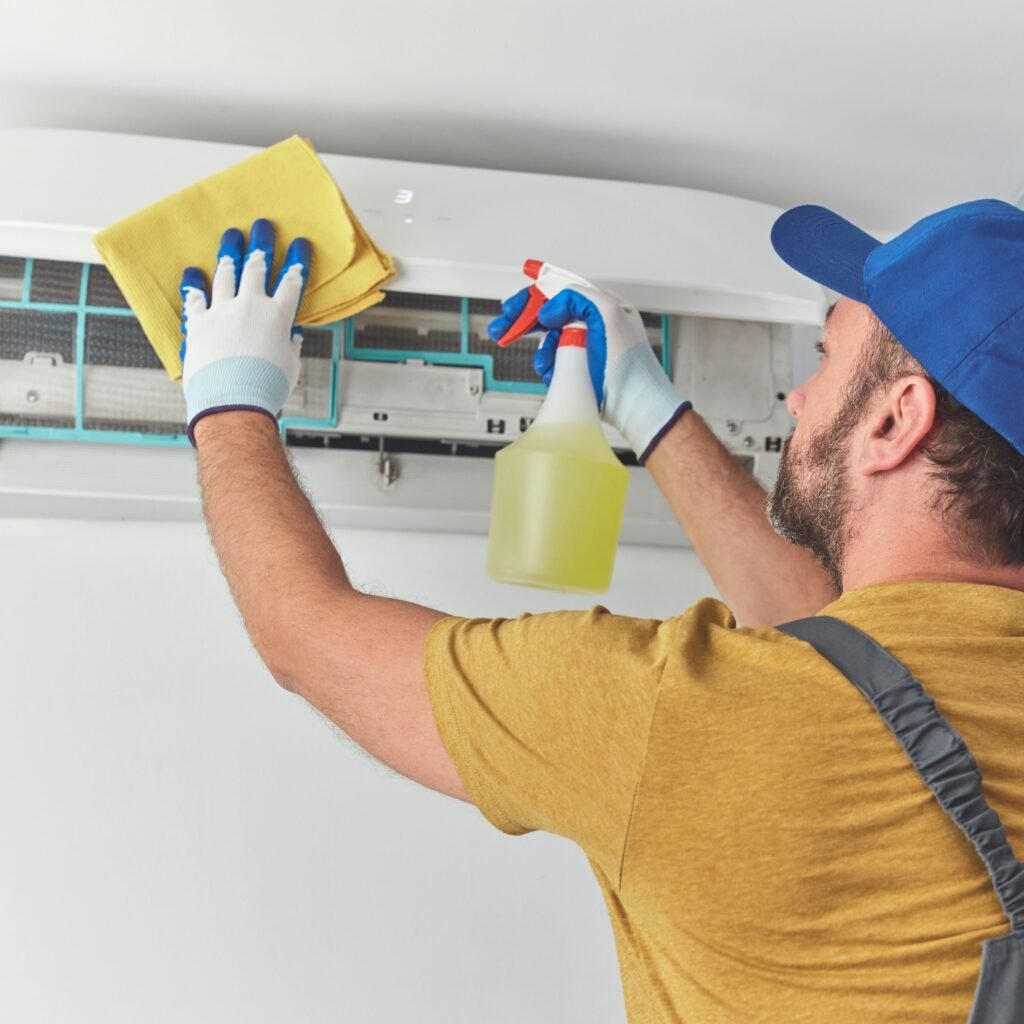
System types vary meaningfully in cost and renovation impact:
- Standard split / multi-split: paired with outdoor condenser units, in ratios from 1:1 up to 4:1.
- Ductwork (canalizzato): hidden ceiling grilles, common in high-end renovations.
- Monoblock (no outdoor unit): uses two exterior wall vents instead of an outdoor compressor, which makes it the standard choice for historic buildings under heritage protection (vincoli storici) and Soprintendenza review, the same constraint we flag when buyers are evaluating listings in Trieste’s Borgo Teresiano or San Vito.
- VMC (controlled mechanical ventilation): essential in tightly insulated homes (thermal cappotto) to manage humidity and prevent wall mold.
3. Electrical & Safety Systems
A compliant modern circuit breaker panel (quadro elettrico) features dedicated residual current breakers (salvavita / magnetotermico), typically split into a general main switch, a 16A power circuit for kitchen appliances and heavy loads, and a 10A lighting circuit. High-draw features — air conditioners, hydro-massage tubs — need their own dedicated circuits, not a shared one.
Grounded outlets have three holes; two-hole outlets lack a ground wire. In older properties (1970s–80s), check the light switches: vintage metallic switches or rigid, brittle wire insulation both indicate an outdated electrical system due for replacement, regardless of what the APE energy certificate’s system-capacity figures suggest. Electrical upgrades rarely appear as a line item on an APE energy certificate at all, which is exactly why this check has to happen in person.
4. Plumbing & Drainage Inspection
Older systems often use traditional “foil” brass turn-handle shut-off valves (a fioretto) beneath kitchen sinks, a sign of age and a candidate for thread corrosion. Bathrooms with slightly offset or angled toilets often point to custom plumbing rerouting to reach the main stack lines. Common drain stack materials range from PVC to legacy lead or fiber-cement (Eternit); a raised step at a bathroom entrance usually signals a floor build-up added to achieve proper drainage slope.
5. Windows, Shutters, and Chimneys
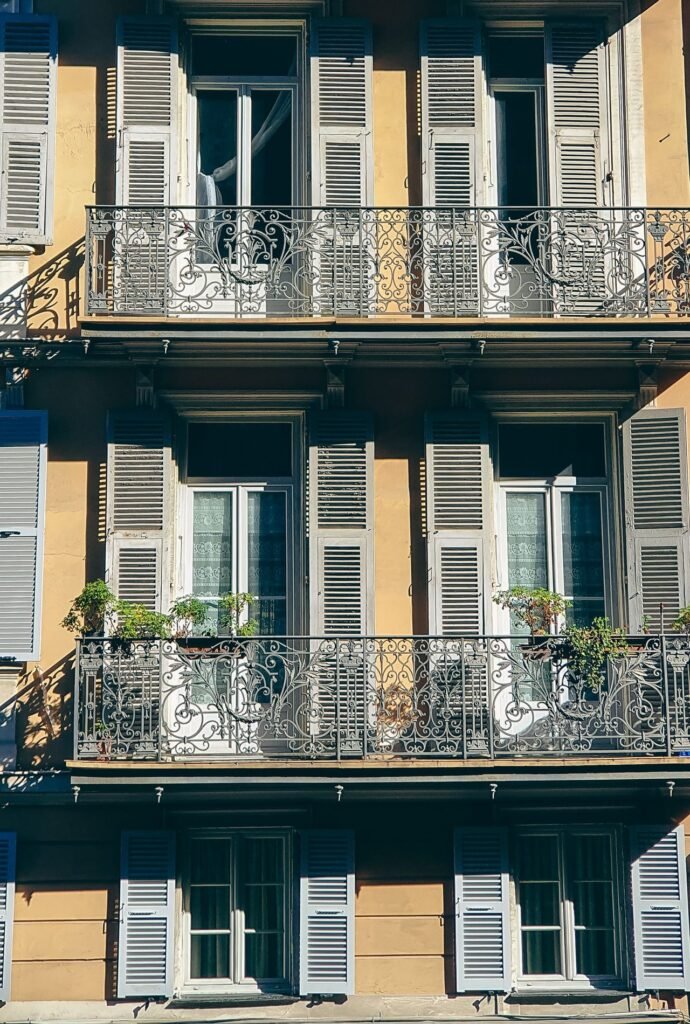
Window frame material is easy to identify by touch and finish: timber feels warm; aluminum has crisp, sharp-cut joints; PVC shows wider, heat-welded seams. Rolling shutters follow the same pattern — wood uses linked slats with metal connectors, PVC has bottom drainage holes with end-caps, aluminum uses slim, low-profile slats.
Local regulations on kitchen exhaust hoods and chimney flues vary significantly by municipality. In Trieste specifically, kitchen exhaust hoods are generally required to discharge directly to the roof stack rather than vent horizontally through exterior walls; recirculating charcoal filters are common in practice, but local health authorities (ASL) tend to enforce roof-line venting strictly on newly renovated kitchens. Confirm the local rule before assuming a recirculating hood will pass inspection as it’s another item the APE energy certificate won’t flag for you.
Why This Matters Before You Buy
None of this replaces professional due diligence. It’s a way to walk into a viewing with the right questions, not a substitute for having the property systems inspection and the paperwork verified by a notary or qualified technician before you sign. If you’re weighing a purchase in Trieste specifically, the APE energy certificate is one piece of a wider due-diligence checklist that also covers catasto matches, condono edilizio, and heritage constraints — we walk through the full list in Buying Property in Trieste: What They Don’t Tell You.
It’s also worth budgeting realistically for what an outdated APE energy certificate implies. If a property needs a new thermal envelope or system upgrade to move up an energy class, don’t assume a subsidy will cover it. Superbonus in 2026 is restricted to designated seismic-crater zones, and Trieste isn’t one. Standard tiered renovation and energy bonuses still apply, and they’re worth planning around with real numbers rather than a discount that may not materialize. We cover the current 2026 incentive landscape, and what it means for renovation budgeting in Trieste specifically, in Trieste Real Estate: The Smartest Places to Invest in 2026.
Final Takeaway
The APE energy certificate is far more than paperwork required for closing day. Read past the letter grade, and the APE energy certificate becomes a technical blueprint of a home’s efficiency, comfort, and true running cost. Pair that reading with a physical, on-site property systems inspection, and you get an accurate picture of what you’re actually buying, not just what the listing, or the certificate’s cover page, says you’re buying.
Ready to Buy With a Clear Picture of What You’re Getting?
Before you make an offer, get an independent read on the APE energy certificate and the systems behind it. We work only for you Book your free intro call.