
Foreign buyers are quietly moving into Trieste for prices Vienna and Munich left behind years ago. Here’s what’s actually driving the shift — and the checks most buyers skip before they sign.
Table of Contents
If you’re weighing buying property in Trieste, the number that usually starts the conversation is the price gap. Ninety minutes from Vienna and a short flight from Munich, Trieste is selling Habsburg-era architecture — same empire, often the same architects — for roughly a third of what those cities charge per square meter.
That gap hasn’t gone unnoticed. Buyers from Austria, Germany, the UK, and the US are increasingly looking past Tuscany and Lombardy toward this Adriatic port city. But a price gap by itself isn’t a reason to buy — it’s a reason to look closer. Here’s what’s actually driving the shift, and what to check before you’re one of the buyers who found out the hard way that “cheap” and “clean title” aren’t the same thing.
The Real Price Gap: Buying Property in Trieste vs. Munich, Vienna, and Florence
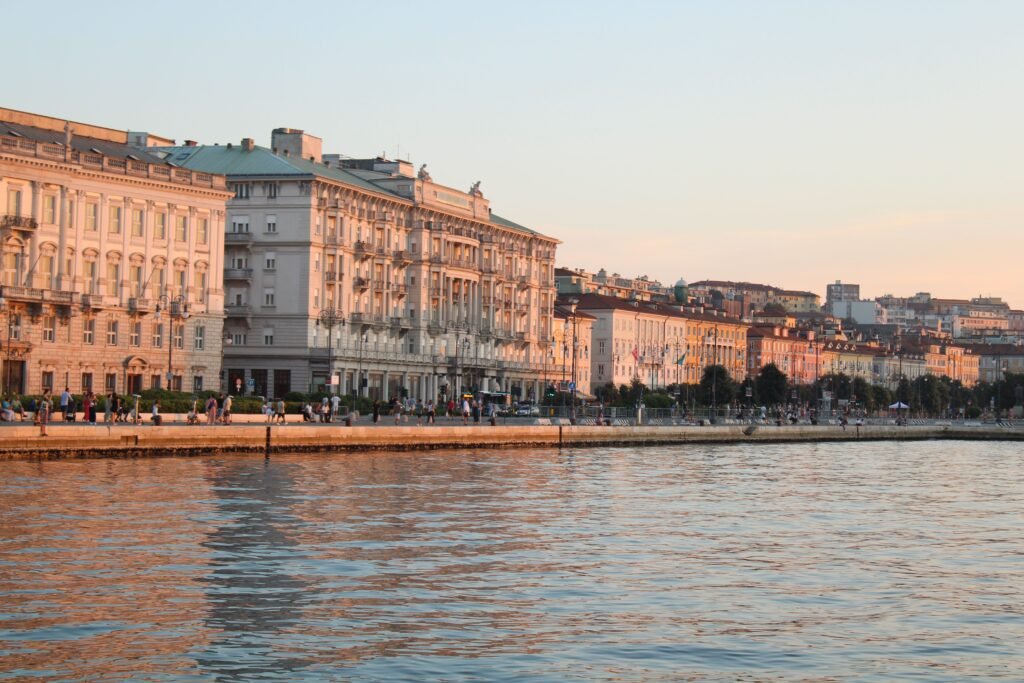
Trieste was the primary seaport of the Austro-Hungarian Empire for over a century. Its central districts — Borgo Teresiano and San Vito, in particular — were built by the same Habsburg-era architects behind Vienna and Graz: high ceilings, herringbone parquet, ornate Neoclassical facades, grand stairwells.
The valuation gap between those cities and Trieste hasn’t closed yet.
| City | Market Profile | Prime Historic Center (€/sqm) |
|---|---|---|
| Munich | Overheated financial hub | €9,500 – €13,000+ |
| Vienna / Graz | Saturated Central European capitals | €8,000 – €11,000 |
| Florence / Venice | Tourist-dense heritage markets | €6,000 – €9,500 |
| Trieste | Emerging coastal market | €3,000 – €4,500 |
That’s roughly a 60% discount for comparable architecture and, in Trieste’s case, direct sea access thrown in. It’s a big part of why buying property in Trieste has stopped being a footnote in cross-border property search and started showing up as a deliberate comparison point against Milan and Vienna.
Why Foreigners Are Buying Property in Trieste Right Now
Two structural shifts are doing the work here, not just word of mouth:
Porto Vecchio. The redevelopment of Trieste’s Old Port is one of the largest waterfront regeneration projects in Southern Europe — 60 hectares of historic maritime warehouses being converted into innovation hubs, congress space, parks, and residential development. Projects at this scale tend to lift valuations in the surrounding districts over the following decade; Trieste is early in that curve, not late. Progress is tracked publicly through Porto Vivo, the project’s official real estate arm.
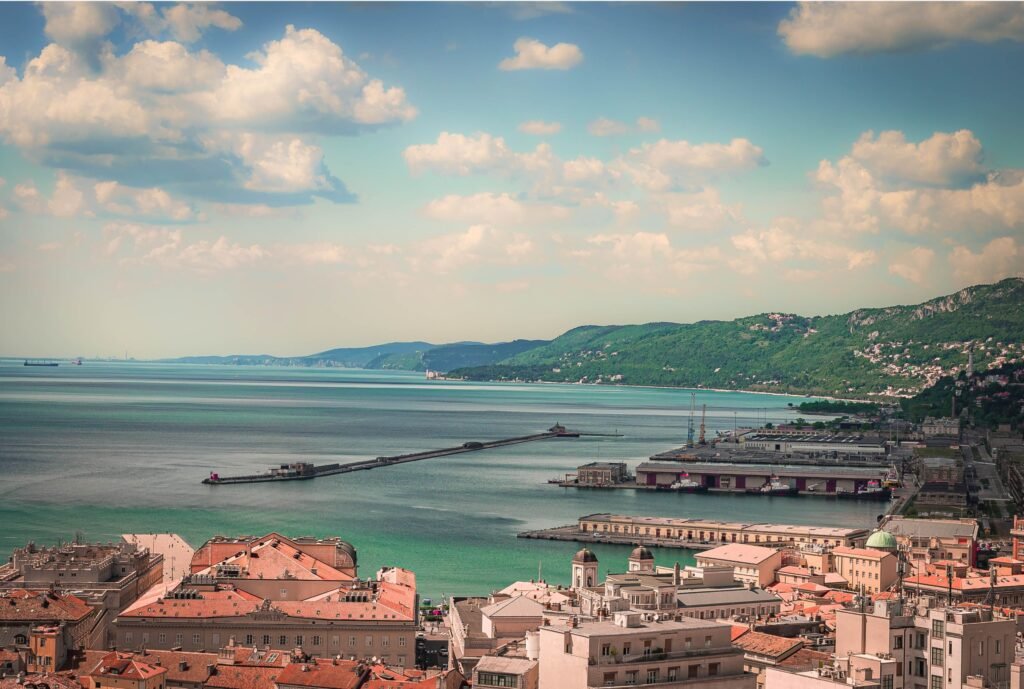
Connectivity. Trieste sits at the junction of Western, Central, and Southeastern Europe, with international free-port status, direct rail links into Central Europe, and two airports within reach (Trieste’s own TRS and Venice Marco Polo). None of this is speculative — it’s existing infrastructure, not a promise.
Trieste Real Estate for Foreigners: Life on the Ground
Skip the “hidden gem” framing — here’s what actually changes day to day for foreigners settling into Trieste real estate. The city runs on a genuine Central European–Adriatic mix: German, Slovenian, and Italian overlap in daily use, a legacy of the Austro-Hungarian era and the Slovenian border a few kilometers away. Cost of living, dining, and property taxes all run meaningfully below Milan or Rome. And unlike most Italian coastal cities, you get a walkable, functioning city center with immediate sea access — not a resort town that empties out in October.
None of that is why you should buy here. It’s why the people who already have are staying.
Due Diligence Buying Property in Italy: What a Buyer-Side Check Covers
This is the part most “why Trieste” articles skip, and it’s the part that determines whether the discount you’re getting is real or just deferred cost.
A price gap this size usually means one of two things: genuine undervaluation, or a property with issues priced in that the seller isn’t volunteering. Proper due diligence when buying property in Italy typically covers:
- Catasto (land registry) match. Does the official registered floor plan match what’s actually built? Unregistered modifications are common in older buildings and become your problem, not the seller’s, once you sign.
- Condono edilizio. If past renovations were never formally amnestied, you can inherit an unresolved compliance issue along with the apartment.
- Vincoli storici. Many Borgo Teresiano and San Vito buildings carry heritage protections that restrict what you can renovate — worth knowing before you budget a renovation, not after.
- Who the agent actually represents. In Italy, the agenzia immobiliare handling the listing is typically working for the seller, even when they’re friendly and helpful to you. That’s not a character flaw — it’s the business model. It’s also why a second, independent check matters.
Knowing the list before you view a property is what separates normal buyers and buyers who really know what they’re doing whit their money.
Buying Property in Trieste Isn’t the Same as Italy’s €1 Houses
If “cheap Italian property” makes you think of the €1 house headlines, Trieste is a different market entirely — turnkey Habsburg apartments in a functioning port city, not abandoned homes in depopulated hill towns with renovation mandates attached. We’ve written about what those €1 house deals actually involve: The Truth About Italy’s €1 Houses. Worth a read if you want to know the difference before a listing site blurs the two together.
Best Areas to Buy Property in Trieste
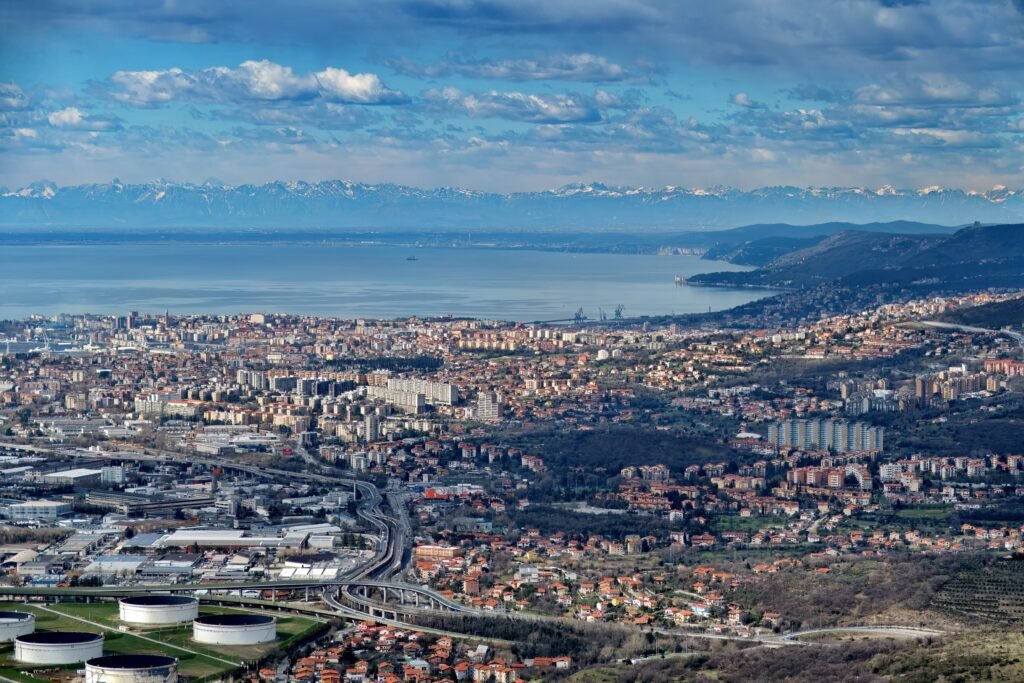
Three micro-areas come up most often among buyers we talk to, each for a different reason:
- Borgo Teresiano — grand Habsburg apartments, high historic value, best for buyers prioritizing architecture and central location.
- San Vito & Campi Elisi — quieter, more residential, sea views, better fit for long-term living than short-stay traffic.
- Cavana & San Giusto — walkable, dense with dining, closest to the old town’s day-to-day life.
Which one fits depends on whether you’re buying to live in it, rent it, or both, and that changes the due-diligence priorities above, not just the price bracket. If renting is the plan, the district math looks different again — entry price, yield, and tenant type all shift by area. We’ve broken that down in Trieste Real Estate: The Smartest Places to Invest in 2026.
Trieste vs. Milan: Which Is Better for Buying Property?
If you’re weighing Trieste against Italy’s more obvious choice, we’ve broken down exactly what a €350k budget buys in each city: Milan vs. Trieste — What €350k Buys You. The short version: in Milan, €350k buys a compromise. In Trieste, it buys a choice.
FAQ: Buying Property in Trieste as a Foreigner
Is it safe for foreigners to buy property in Italy? Yes, foreign nationals can buy property in Italy, though the process involves Italian-specific steps (codice fiscale, notarial deed, registry checks) that differ from most home markets. Having these verified by an independent professional before you sign is standard practice, not a red flag.
Do I need to speak Italian to buy property in Trieste? No, but the contracts, land registry records, and much of the process will be in Italian. Buyer-side representation exists specifically to translate not just the language but the process itself.
What extra costs should I expect beyond the purchase price? Beyond the sale price, buyers typically budget for notary fees, registration taxes, and agency commission where applicable. Exact figures depend on residency status and property type — a professional can confirm your specific numbers before you commit.
Is Trieste a good market for foreign buyers right now? The price gap versus comparable Central European cities is real and well-documented. Whether it’s a good fit depends on your goals and on the condition of the specific property — which is exactly what due diligence is for.
Ready to Start Buying Property in Trieste the Right Way?
Before you view a single property, get an independent read on what to check and what it’s really worth. We work only for you, never the seller. Schedule a free call.